
 By Admin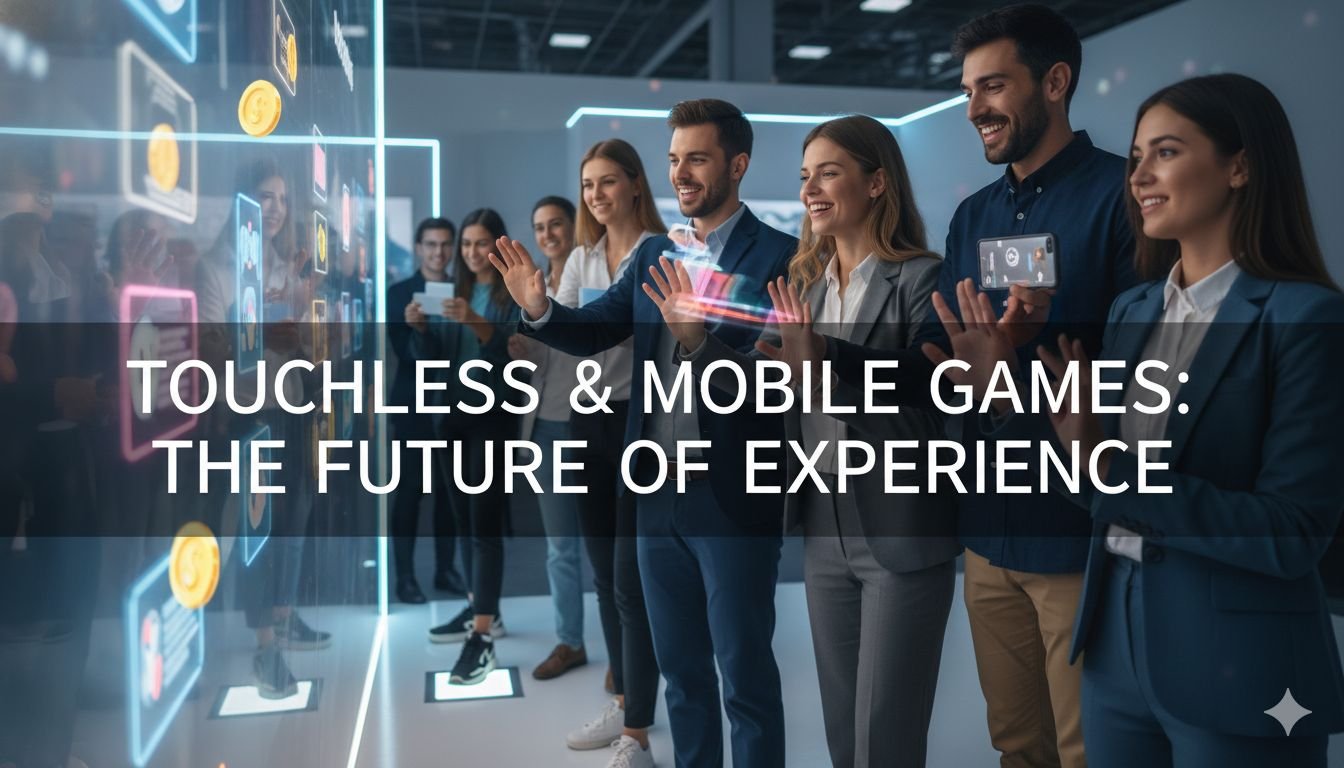
If there’s one thing I’ve learned from watching people at trade shows — it’s this: attention is a currency, and it’s vanishing faster than ever.
You have maybe five seconds — that’s it — to make someone stop, look, and engage before they drift to the next flashing booth or shiny giveaway.
And that’s why the real challenge for modern exhibitors isn’t just about visuals anymore — it’s about designing for short attention spans. Over the past few years, I’ve seen firsthand how trade show booth games have become one of the smartest ways to capture that fleeting attention — and turn it into lasting memory.
1. The New Reality: Visitors Don’t Linger Anymore
Let’s be real — the average visitor walks into a trade show with sensory overload. Lights, sounds, handshakes, and 500 companies all trying to say “look at me.”
So, what do they do? They filter.
If your booth doesn’t communicate fun or value within seconds, they mentally swipe left.
That’s exactly why short, impactful interactions — like mini-games, instant AR experiences, or touchless challenges— have become essential. They give people a quick dopamine hit without demanding their full schedule.
I’ve seen attendees line up not for long demos, but for 30-second games that made them laugh, compete, or win something. That’s the power of micro-engagement.
2. Game Design Rule #1: Hook Them Instantly
At a trade show, you don’t have time for tutorials or instructions. The first three seconds need to explain everything visually.
That’s why every custom branded game we create starts with this simple test:
“Can a random visitor understand what to do just by looking at it?”
If the answer is no, it’s too complicated.
The best games at events have one clear mechanic — tap, drag, match, or aim. That’s it. The trick is to blend that simplicity with a brand message so naturally that the player feels like they’re part of your story.
For example, one of our motorcycle clients wanted people to remember their “smooth control” feature. So, instead of a poster, we built a mini racing game where players had to maintain perfect balance. It was short, fun, and memorable.
3. Rule #2: Reward Fast, Reward Often
People love immediate gratification. Waiting kills excitement.
At the booth, small rewards — whether digital points, on-screen confetti, or even a leaderboard shoutout — keep people emotionally engaged.
We once created a game where players could instantly spin for a digital prize right after finishing a round. The booth didn’t just attract players — it attracted spectators cheering for the next winner. That crowd energy is contagious and magnetic.
The psychology is simple:
- Short task ✅
- Immediate feedback ✅
- Visible reward ✅
That’s the recipe for sustained booth engagement.
4. Rule #3: Let Them Play Without Touching (If Possible)
Touchless and mobile games are huge right now, especially post-pandemic. People love playing with gestures, scanning QR codes, or using their phones as controllers.
We experimented with a mobile trivia system once — players could join directly from their phones using a QR code, and the live leaderboard appeared on a big screen. Within minutes, the booth became a mini-arena.
No physical setup, no crowding — just pure engagement.
This hybrid format also allows integration with VR for events — where quick mobile interactions serve as an entry point to a deeper VR experience. It’s efficient and scalable.
5. Rule #4: Design for Flow, Not Complexity
Trade shows are chaotic, and players often get interrupted mid-game. You need experiences that can pause or restart without frustration.
This is where I’ve learned to simplify every design element — short rounds, easy restarts, and auto resets. If the game requires focus or patience, it won’t work in a public setting.
In one of our booths, a brand insisted on a 2-minute puzzle game. We launched it. Nobody played. When we replaced it with a 15-second matching challenge — people couldn’t stop. Same visuals. Different pacing. Completely different result.
Lesson learned: simplicity beats sophistication every single time.
6. Rule #5: Every Game Should Tell a Story
Even a 30-second interaction can tell a brand story if you design it intentionally.
Let’s say your company is about innovation — make the player “build” or “discover” something.
If your brand focuses on speed — design a race or timed challenge.
If your theme is reliability — create a balancing or endurance game.
When your gameplay aligns with your message, visitors won’t just remember the fun — they’ll remember why it was fun. That’s marketing gold.
7. The Trade Show Floor Never Lies
After running dozens of booths, I’ve realized something important: the floor is the ultimate feedback loop.
You see exactly how people respond — who stops, who smiles, who stays.
Games that looked “brilliant” in the studio sometimes flop in real-world noise. And the simplest prototypes often become crowd favorites. It’s humbling and honest — and it teaches you what human engagement really means.
Because in that moment, surrounded by flashing lights and chatter, only one thing matters:
“Is someone having fun right now?”
If the answer is yes, you’ve already won.
8. The Future: Attention-Friendly Experiences
As attention spans shrink and booth competition grows, exhibitors who adapt will thrive. The future of engagement lies in short-form interactivity — games, AR pop-ups, fast challenges, and instant digital rewards.
Visitors don’t want to be impressed; they want to feel involved.
And when that happens — when someone walks away saying, “That was cool!” — you’ve created a connection no billboard could ever achieve.
Final Thoughts
Building for short attention spans isn’t about dumbing things down — it’s about designing smart simplicity.
If you can grab attention fast, deliver joy instantly, and tell your brand story within a minute — you’ve cracked the code of modern experiential marketing.
Because at the end of the day, the best booth games don’t just entertain. They remind us that a few seconds of genuine fun can make your brand unforgettable.